
Mercedes-Benz has published a verified environmental assessment for its all-new electric C-Class, a mid-size saloon designed from the ground up as a battery-electric car. The company says the model cuts its lifecycle CO₂ footprint by around two-thirds compared with today’s combustion C-Class, while offering a WLTP range of up to 762 km (473 miles). The findings form part of the brand’s 360° environmental check, which it says was verified by independent auditors.
The new electric C-Class is the next step in Mercedes-Benz’s push to electrify the mid-size segment, following the recently launched electric GLC. According to the manufacturer, many of the sustainability measures introduced on that model now carry over to the C-Class, and the company says the result is a roughly two-thirds reduction in CO₂ emissions across the vehicle’s entire lifecycle versus the current combustion-engined car.
Range, efficiency and charging
Mercedes-Benz quotes an electric range of up to 762 km (473 miles) on a single charge under WLTP, positioning the car for both daily use and longer trips. A combined energy consumption of 18.5 to 14.1 kWh/100 km makes it, in the company’s words, one of the more efficient cars in its class. Further variants with rear- and all-wheel drive and different battery sizes are due next year, including a rear-wheel-drive model that the manufacturer expects to reach up to 800 km (497 miles).
The car uses an 800-volt architecture, which the company says underpins its efficiency and short charging times. Mercedes-Benz states that up to 325 km (202 miles) of range can be added in ten minutes using the maximum DC charging power. A new one-box brake system handles up to 99 percent of braking events through recuperation, with a recuperation output of up to 300 kW.
Recycled materials and low-CO₂ supply chain
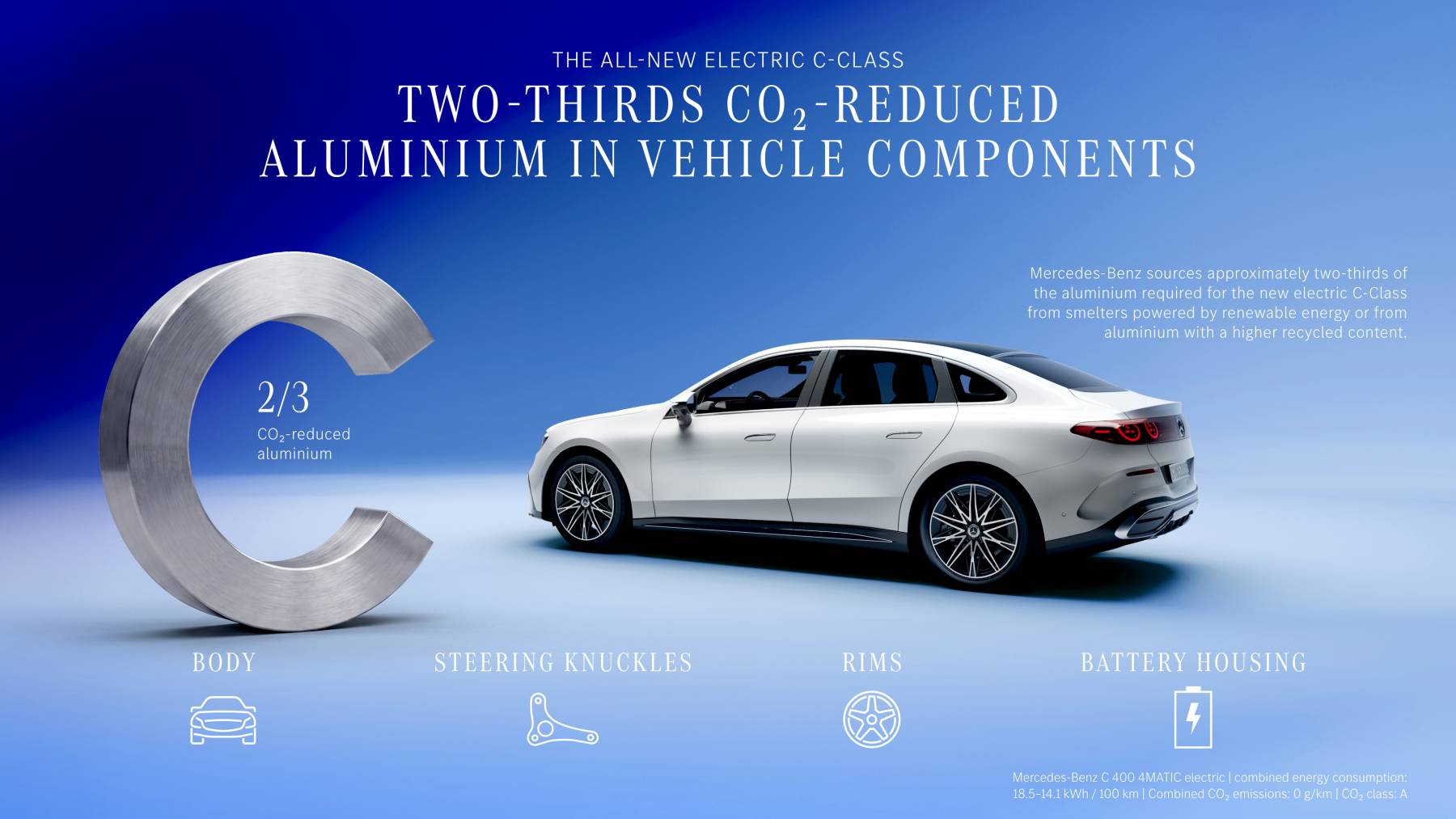
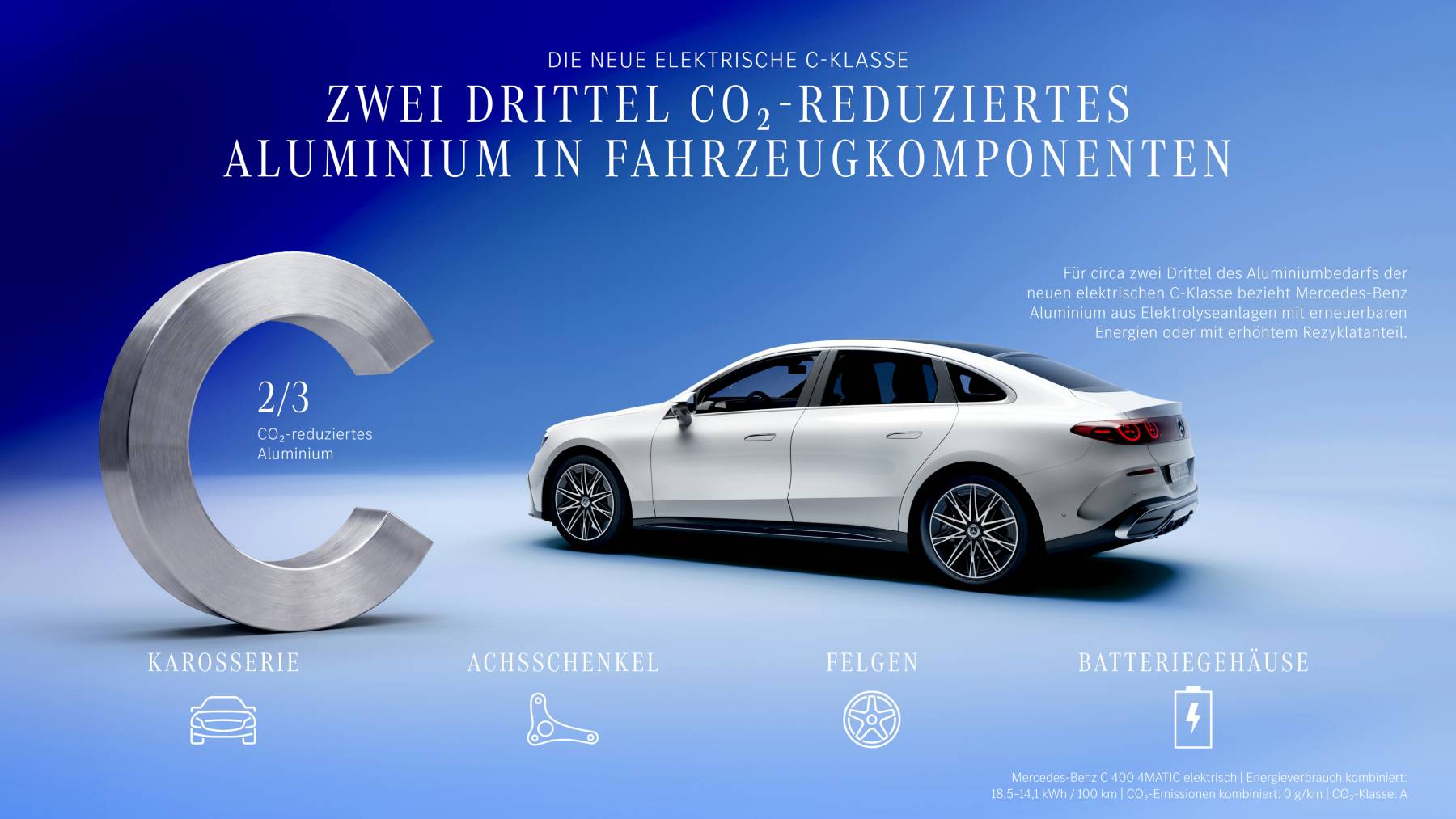
Mercedes-Benz says resource efficiency was built into the car’s development. Around two-thirds of its aluminium comes from smelters running on renewable energy or with a higher recycled content, while about 45 kilograms of internally produced steel is sourced from electric arc furnaces powered by renewable electricity. The company reports these and other measures cut supply-chain CO₂ emissions by roughly 23 percent.
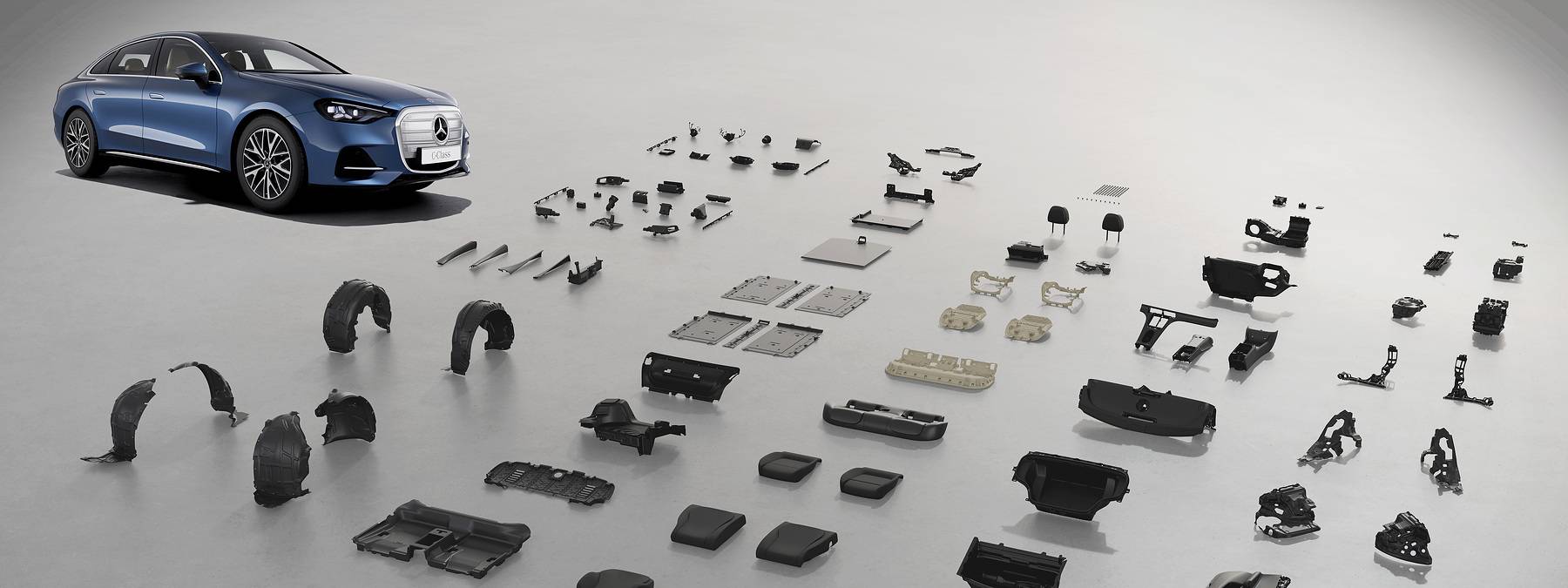
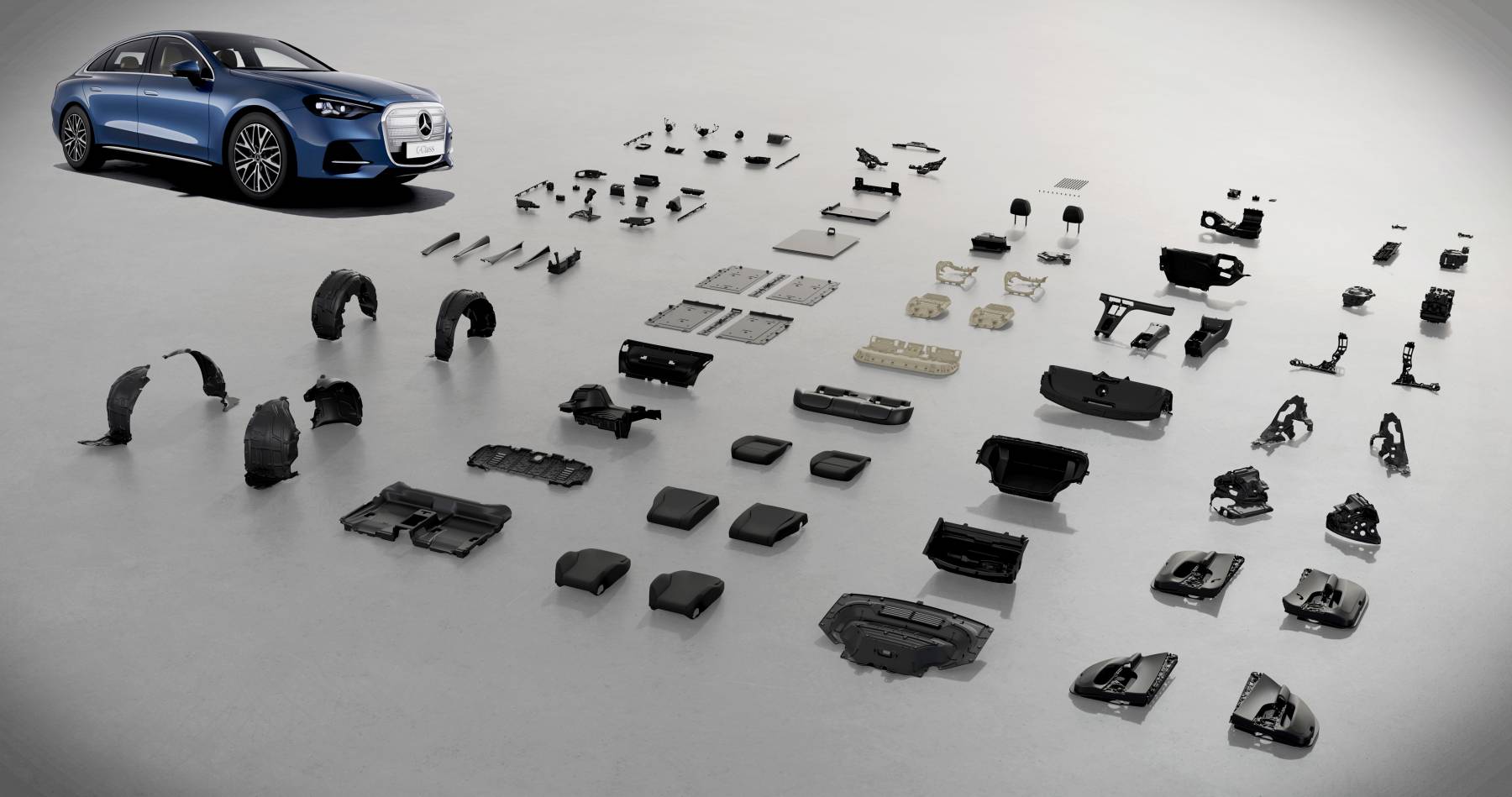
The use of secondary plastics has more than quadrupled compared with the current C-Class, with around 49 kilograms of thermoplastic recyclate in total. Examples cited include a frunk tray with 50 percent post-consumer recyclate, wheel-arch liners at 93 percent, jacking points made entirely from recycled bumpers of end-of-life vehicles, and bumper carriers at 83 percent recycled content.
Vegan interior and cleaner production
Mercedes-Benz offers an optional interior package it says has been certified vegan by the independent Vegan Society, adding that the only other vehicle worldwide with that certification is the electric GLC. The car is built at the company’s Kecskemét plant in Hungary, where a 240,000 m² solar park rated at 27.4 MWp, together with rooftop arrays, brings total installed photovoltaic capacity to 42.3 MWp — enough, the company says, to cover around 25 percent of the site’s annual energy demand. A new paint shop is said to lower energy use by about 20 percent and CO₂ emissions by roughly 80 percent versus the existing facility.
What it means
The environmental check is part of a transparency programme Mercedes-Benz has run since 2005, and the figures give buyers a rare, audited view of a model’s footprint from supply chain to production. For rivals in the premium electric mid-size class, the headline range and charging claims set a clear benchmark to answer.
Facts: Mercedes-Benz electric C-Class
- Range (WLTP): up to 762 km (473 miles)
- Energy consumption: 18.5–14.1 kWh/100 km
- Architecture: 800-volt
- Fast charging: up to 325 km (202 miles) added in 10 minutes
- Max recuperation: up to 300 kW
- Lifecycle CO₂: around two-thirds lower than the combustion C-Class (per manufacturer)
Additional variants with rear- and all-wheel drive and different battery options are due next year.
Source: media.mercedes-benz.com