
Suzuki has used Eicma to announce two new motorcycles: the GSX-10R, a four-cylinder sportsbike aimed at the modern supersport class, and the SV-7S, a middleweight naked bike that carries on from the long-running SV650. Both get a substantial electronics upgrade and are due in showrooms in 2027.
A supersport built for road and track
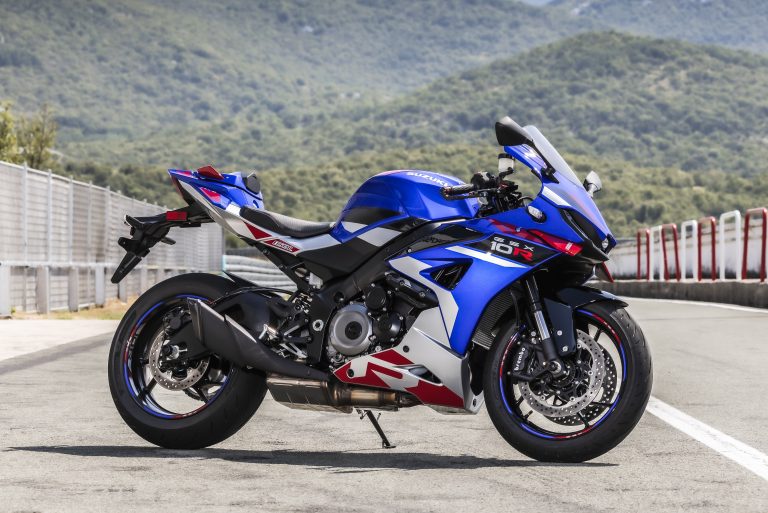
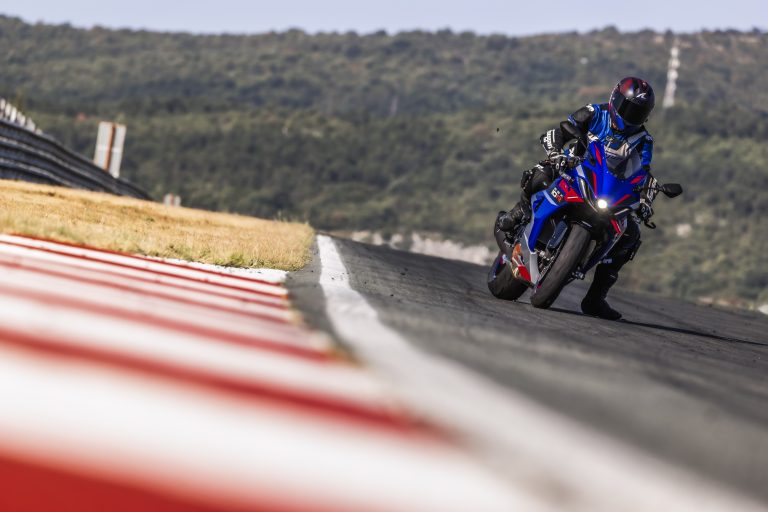
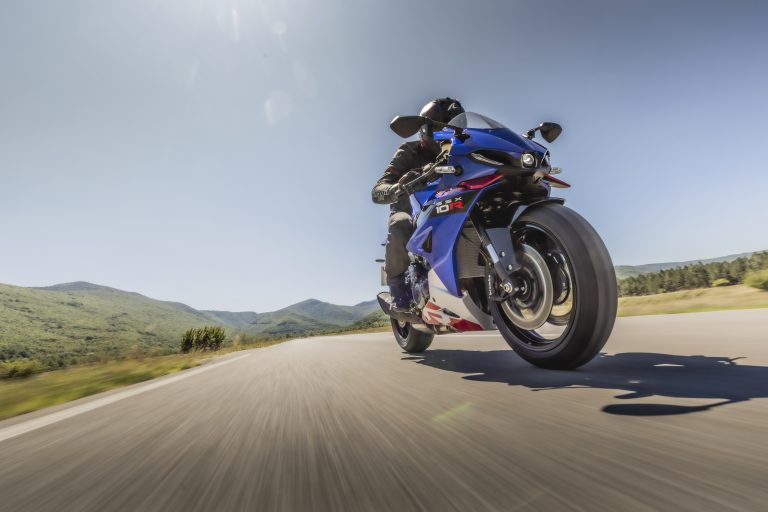
The GSX-10R is Suzuki’s attempt to rethink what a supersport machine should be. The company describes it as a bike made for fun rather than outright lap times. It says the 10R is meant to be enjoyed on city streets, B-roads and track days alike, while the GSX-R1000R remains its flagship for absolute performance.
Suzuki says the bike follows its long-standing “run, turn, stop” design principles. In its words, the electronics are there to enhance a well-engineered base, not to cover for shortcomings.
An updated 152 PS four-cylinder
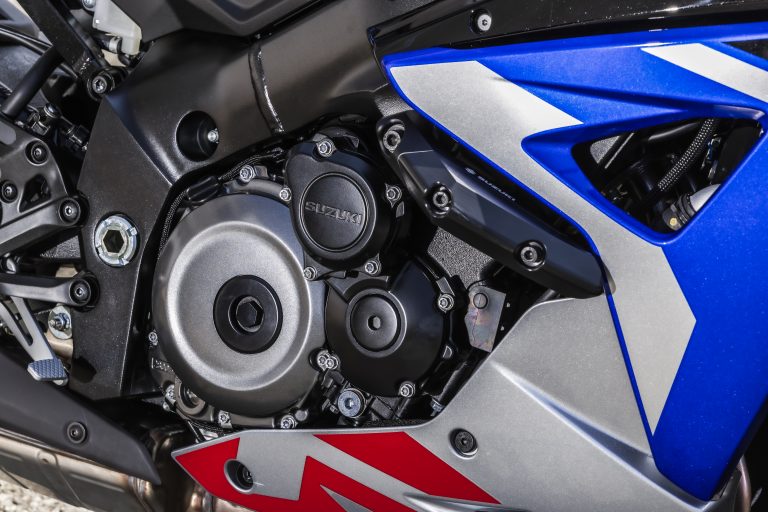
Power comes from an updated version of Suzuki’s 152 PS inline four-cylinder engine. Peak power arrives at 11,000 rpm and peak torque of 106 Nm at 9,250 rpm. The engine has new cams, camshafts and cam chain sprocket, a new cylinder head, barrels and cases, and new crank journals. Suzuki says these changes improve the balance between performance and reliability and prepare the engine for future alcohol-based fuels.
A four-into-one exhaust and Suzuki’s Slipper Clutch Assist are also fitted. The clutch system gives a lighter lever and smoother downshifts.
A sharper chassis with GSX-R ergonomics
The aluminium frame’s main spars run straight from the steering head to the swingarm pivot. The swingarm and subframe are both new. Steering stem offset has been reduced from 35 mm to 30 mm to concentrate steering mass, which brings it closer to the GSX-R1000R’s 28 mm. The seat, handlebar and footpeg positions mirror those of the superbike.
KYB supplies fully adjustable suspension, with 43 mm forks in new brackets and a rear shock designed specifically for the 10R. Brembo calipers grip 310 mm front discs through a radially mounted master cylinder. Cast aluminium wheels wear Bridgestone Battlax Hypersport S23 tyres, sized 120/70 R17 at the front and 190/55 R17 at the rear. The fuel tank holds 18 litres. The 810 mm (31.9 in) seat is 15 mm lower than the GSX-R’s, so more riders should be able to reach the ground comfortably.
Six-axis IMU at the core
The Suzuki Intelligent Ride System uses a six-axis IMU and is built around Smart TLRS (traction, lift, roll torque and slide) Control, which has 10 settings. Roll torque control uses lean angle and speed to set power output before wheelspin happens. Suzuki says this gives smoother drive than a conventional traction control system, which only reacts once the wheel spins. Slide control handles the early stages of a slide, and traction control steps in more firmly if needed. Lift control manages wheelies.
There are also three power modes that all reach the same peak output with progressively softer mapping, plus cornering ABS, a bi-directional quickshifter and three engine-braking settings. The list continues with cruise control, an active speed limiter, launch control, easy-start and low RPM assist. A new brake hold system keeps rear brake pressure for 30 seconds after the bike stops, on slopes or on the flat.
A colour TFT display supports smartphone connectivity through the Suzuki Ride Connect+ app, and there is a USB-C socket next to it. Lighting is full LED. A new Suzuki Ground Beacon System projects the indicator signal onto the road around the bike.
Styling and colours
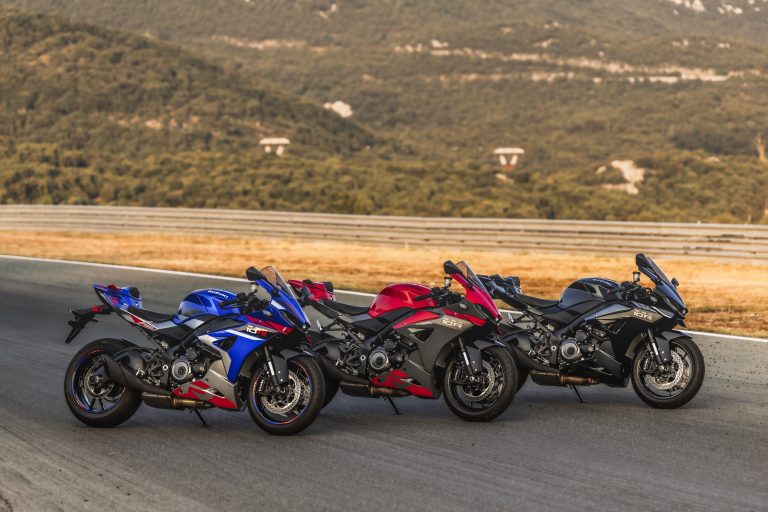
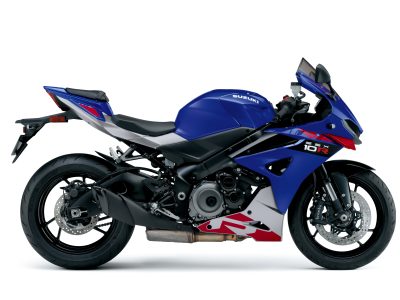
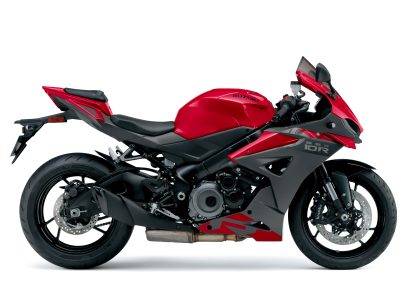
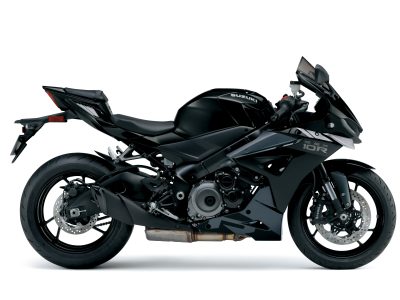
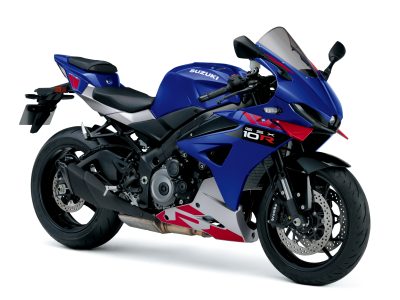
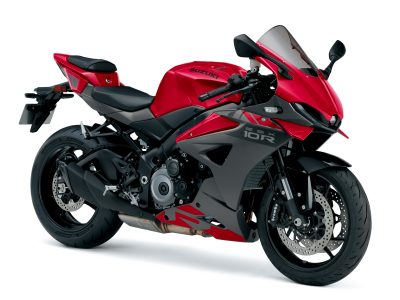
The fairing takes cues from the GSX-R, including the daytime running light design and front air intakes. Suzuki says it was refined in the wind tunnel and has small winglets. There are three colour schemes: Pearl Vigor Blue and Metallic Mystic Silver with red accents, Pearl Pulse Red and Solid Iron Grey, and Glass Sparkle Black and Metallic Galaxy Grey.
SV-7S: the SV650 formula, updated
The SV650 launched in 1999 and stayed on sale in one form or another until 2025. Its 645 cc V-twin returned to Europe in 2026 in the SV-7GX. The SV-7S now brings the engine back in a naked roadster, which is what the original SV650 was.
The 90-degree twin produces 73 PS at 8,500 rpm and 64 Nm at 6,800 rpm. It gets new transmission gears, a new magneto, revised intake and electronic throttle bodies, and a new catalytic converter for Euro 5+ compliance. The steel trellis frame carries over. Wider tapered aluminium handlebars, a redesigned 14-litre tank and revised suspension settings focused on comfort are new. Suzuki calls the 785 mm (30.9 in) seat height class-leading. Tyres are Dunlop Roadsmart 3.
Ride-by-wire allows three power modes. Modes A and B both deliver full power, with B using a softer curve, while mode C caps output at 61 PS. Three-level traction control, a bi-directional quickshifter, easy-start, low RPM assist and a colour TFT with smartphone navigation are standard. A round LED headlight gives the bike its new face.
What it means
The GSX-10R gives Suzuki a sportsbike that sits below the GSX-R1000R and is pitched more at road riders. The SV-7S returns one of the best-known middleweight nameplates to the naked class with rider aids that are now expected in the segment.
Facts: Suzuki GSX-10R
- Engine: inline four-cylinder, 152 PS at 11,000 rpm
- Torque: 106 Nm at 9,250 rpm
- Brakes: Brembo calipers, 310 mm front discs
- Suspension: fully adjustable KYB, 43 mm forks
- Seat height: 810 mm (31.9 in)
- Fuel tank: 18 litres
- Availability: summer 2027
Facts: Suzuki SV-7S
- Engine: 645 cc 90-degree V-twin, 73 PS at 8,500 rpm
- Torque: 64 Nm at 6,800 rpm
- Seat height: 785 mm (30.9 in)
- Fuel tank: 14 litres
- Availability: spring 2027
The SV-7S arrives at authorised Suzuki dealers in spring 2027, followed by the GSX-10R in summer 2027.
Source: www.suzukipress.co.uk