
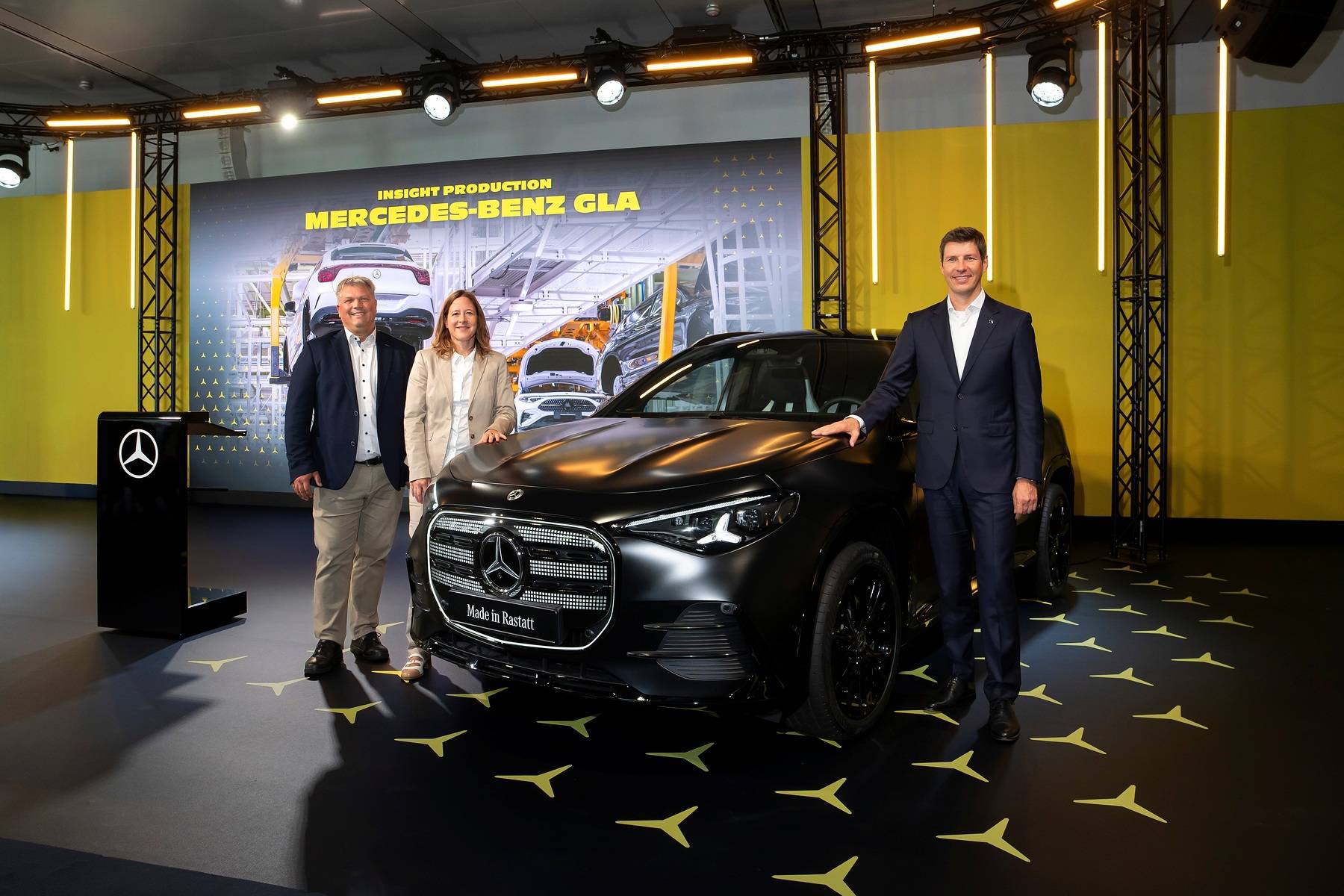
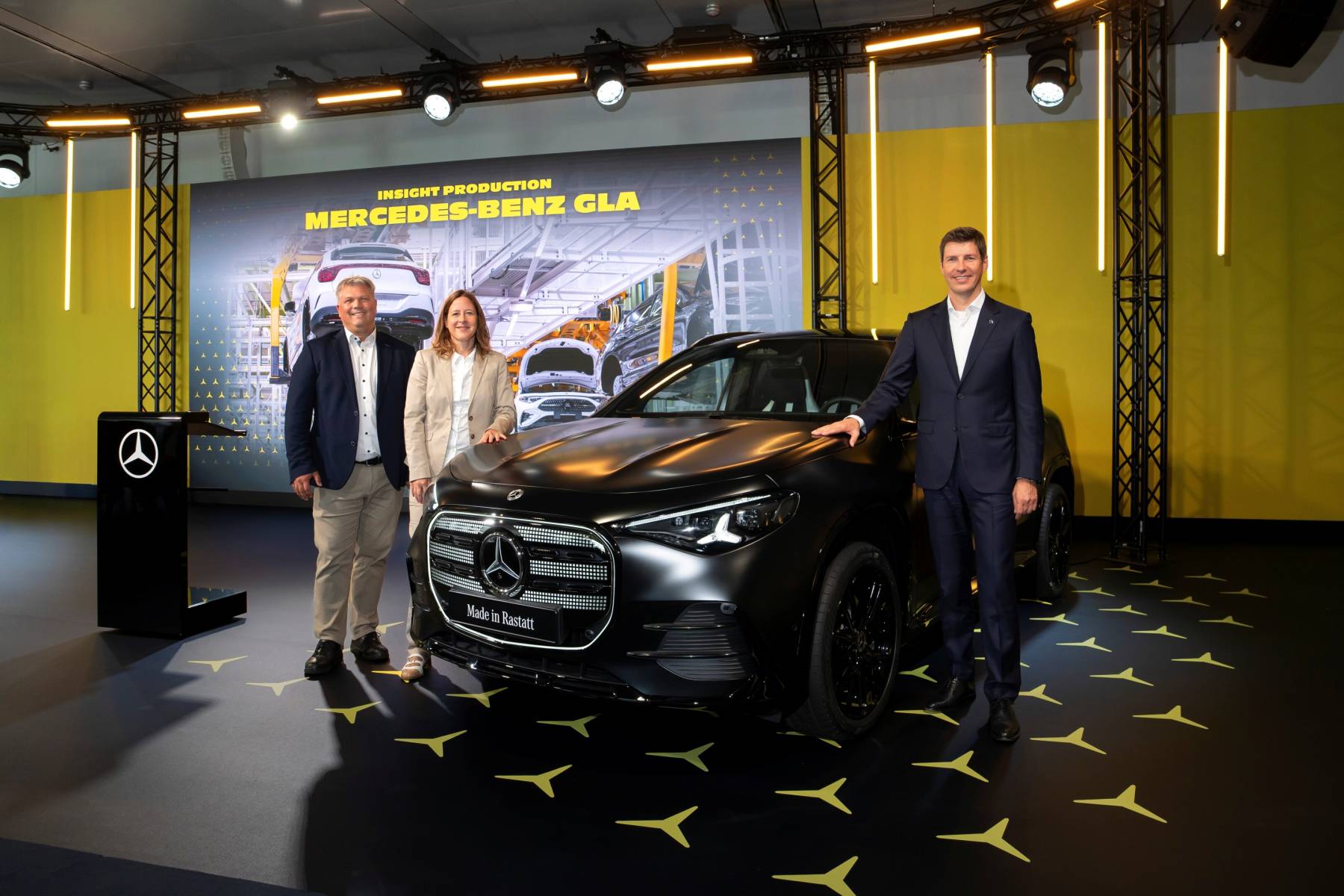
Mercedes-Benz has begun series production of the new GLA at its Rastatt plant in south-west Germany. The all-electric versions are already being built in volume, while the high-tech hybrids with 48-volt technology and a new combustion engine follow later this year. The company is also investing a low triple-digit million sum to convert a second assembly hall, which takes over GLA production from 2027.
Mercedes-Benz has started series production of the new GLA at its plant in Rastatt, the company announced on 17 September 2026. Production of the all-electric models is already running at full volume, and the high-tech hybrid versions — combining 48-volt technology with what the manufacturer describes as a state-of-the-art combustion engine — are due to follow before the end of the year.
The GLA is the latest model from the brand’s new vehicle generation to be built at the site, which Mercedes-Benz positions as its competence centre for compact-segment production.
One line, two very different powertrains
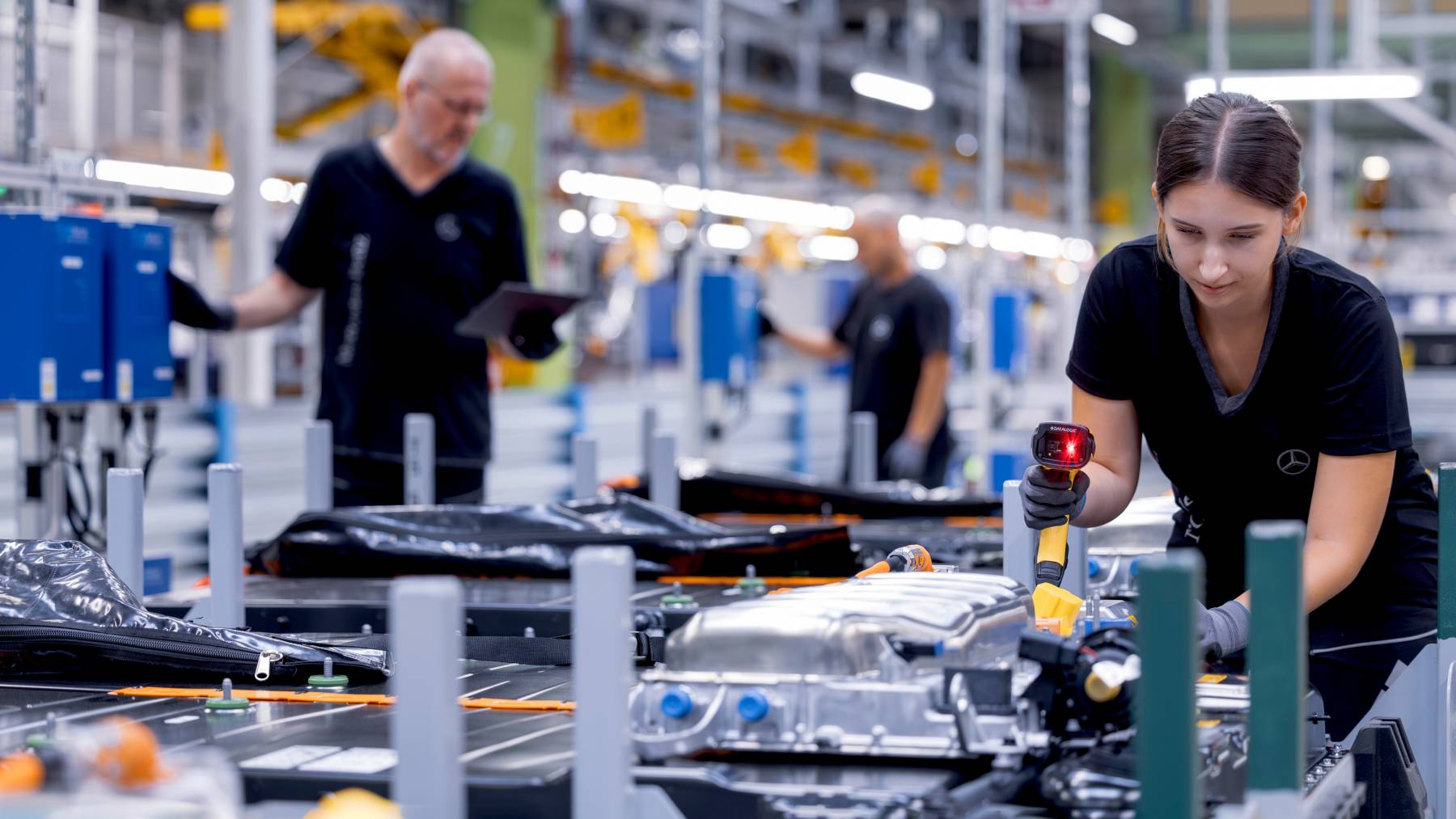
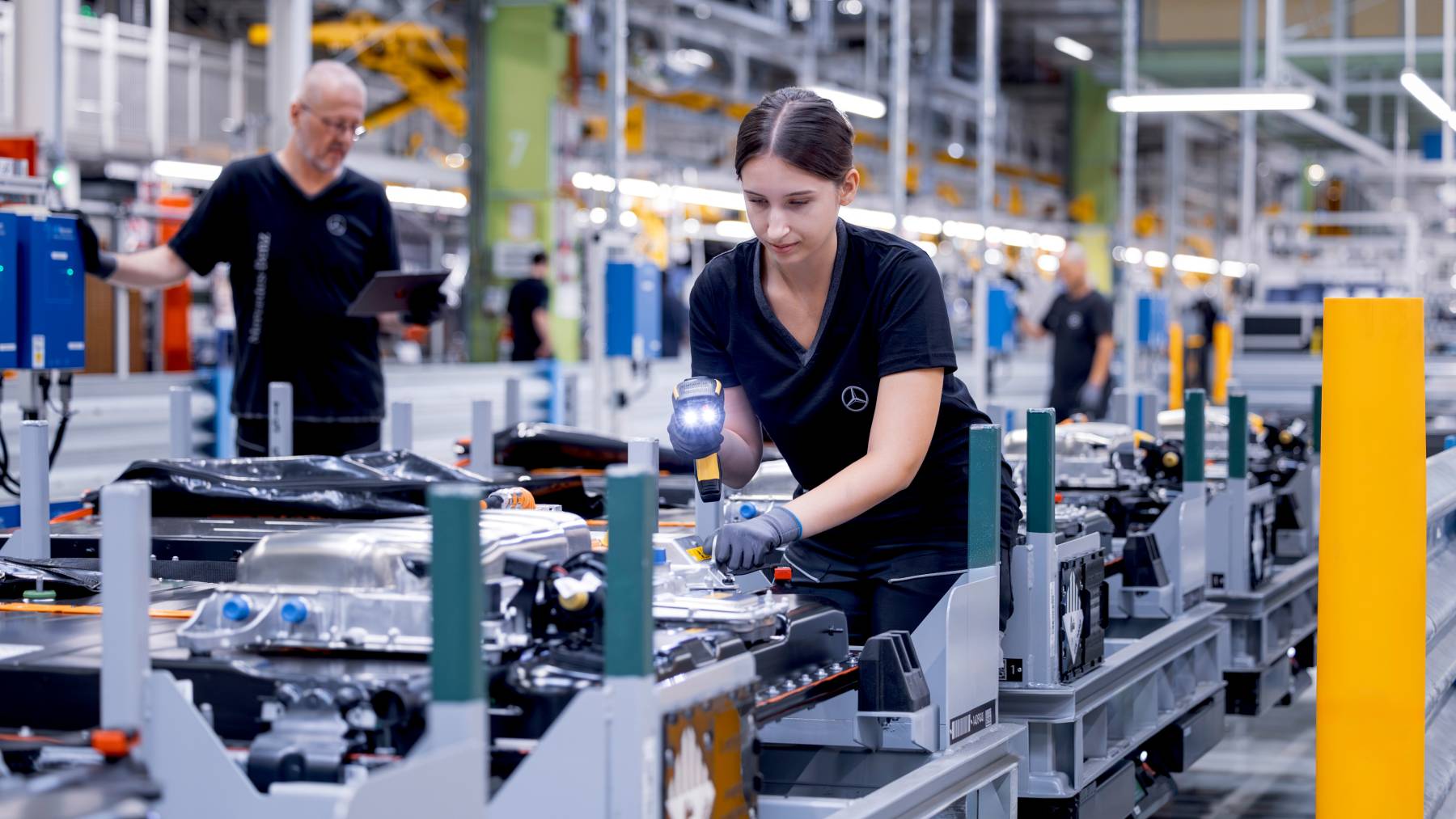
Rastatt has been building cars since 1992 and, with around 7,000 employees, is the largest employer in its region. The plant is set up for what Mercedes-Benz calls drive-flexible manufacturing: hybrids and fully electric cars run down the same line as conventionally powered vehicles, which the company says allows it to react at short notice to demand in individual markets worldwide.
That flexibility matters more than it did a few years ago. Electric demand has developed unevenly across Europe, North America and Asia, and a single line that can absorb a swing between battery-electric and combustion-assisted models removes the need to guess the mix years in advance.
“With the start of production of the new GLA and the investments in Rastatt, we are strengthening the role of the site in the global Mercedes-Benz production network. The manufacturing operation shows how consistently we use digital technologies: MB.OS, artificial intelligence and our MO360 production ecosystem are closely connected and enable even more flexible and efficient production. My thanks go to all the colleagues in Rastatt who made this successful ramp-up possible with passion and innovative strength.” — Michael Schiebe, Member of the Board of Management of Mercedes-Benz Group AG, responsible for Production, Quality and Supply Chain Management
A digital twin for the next assembly hall
The new GLA is currently built in assembly hall 4.0. Mercedes-Benz is now investing a low triple-digit million sum in converting the neighbouring hall 4.1, where the model will be produced from 2027.
For that rebuild, the company is using a digital twin — high-precision simulation of the plant that lets the new line be configured and optimised virtually. According to Mercedes-Benz, this releases significant savings in both construction time and cost. The same method was used for the conversion of hall 4.0 in 2023, which the company says was completed in record time.
MB.OS arrives on the production line
The Mercedes-Benz Operating System (MB.OS) also plays a role in how the GLA is built. Its chip-to-cloud architecture delivers vehicle software from a central server in the Mercedes-Benz Intelligent Cloud rather than through separate hardware modules, so cars leave the line with up-to-date software already installed.
Where the components come from
Rastatt sits inside a wider German supply network. The electric drive units and axles for the new GLA come from Untertürkheim and its Mettingen and Hedelfingen sub-plants. A drive unit consists essentially of three subsystems: an electric motor, power electronics and the transmission element that transfers drive. Mettingen is also responsible for assembling the electric axles, which are shipped to Rastatt as complete systems.
The high-voltage batteries are supplied by Accumotive, the Mercedes-Benz subsidiary in Kamenz, Saxony. Mercedes-Benz calls in-house battery production a decisive success factor for its strategy and points to Accumotive’s 13 years of experience and its role as competence centre in a battery network spanning three continents.
The Kuppenheim site, around ten kilometres (six miles) away, has supplied body-in-white, structural and body parts to Rastatt since 2009 and now does so for the GLA as well. Since the beginning of 2026, Kuppenheim has formally been part of the Mercedes-Benz plant in Rastatt.
What the new GLA brings
Mercedes-Benz describes the new GLA as combining distinctive design, advanced technology and everyday usability. A lower silhouette, a longer wheelbase and an illuminated grille give it a sportier stance than the outgoing car, according to the manufacturer, while the redesigned interior adds a panoramic roof, a large MBUX Superscreen and what the company calls high-quality materials. The MBUX Virtual Assistant with generative AI handles voice interaction.
No performance, range, battery or pricing figures were released with this production announcement.
What it means
For buyers, the practical news is timing: electric GLA models are already being built, so deliveries are the next step, while hybrid versions join the range later in 2026. For Rastatt, the investment in hall 4.1 is the more consequential part — it commits the site to the compact segment well past 2027, at a moment when European plants are being judged on how quickly they can switch between powertrains.
The announcement falls in the brand’s 140th anniversary year, marked by a “140 Years of Innovation” campaign.
The hybrid GLA models with 48-volt technology are scheduled to enter production later this year, with production moving to assembly hall 4.1 from 2027.

Source: media.mercedes-benz.com