
Mercedes-Benz has published the second edition of its Classic Notes for 2026, gathering the anniversaries the brand is marking this year. The list runs from the Belgian-built 230 S “Universal” estate of 1966 to the 300 S luxury sports car of 1951, the AMG V12 flagships shown at the 2001 Frankfurt motor show and the aircraft business that engineer Hanns Klemm took over 100 years ago. It all sits under the company’s “140 Years of Innovation” theme, counted from Carl Benz’s 1886 patent.
Mercedes-Benz is using 2026 to mark 140 years since the automobile was patented, and its Classic department publishes a regular round-up of the milestones falling in each period. The latest instalment covers four dates, plus the 120th birthday of one of the company’s most influential engineers.
The estate that pointed towards the T-Modell
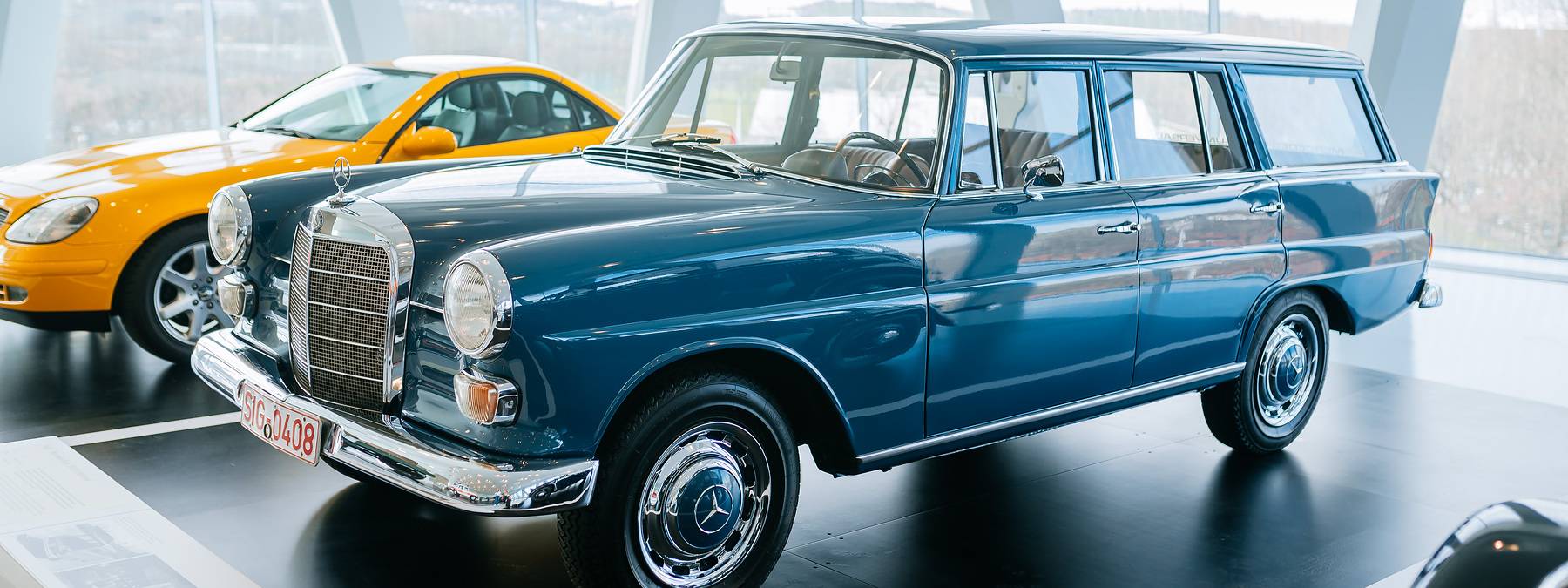
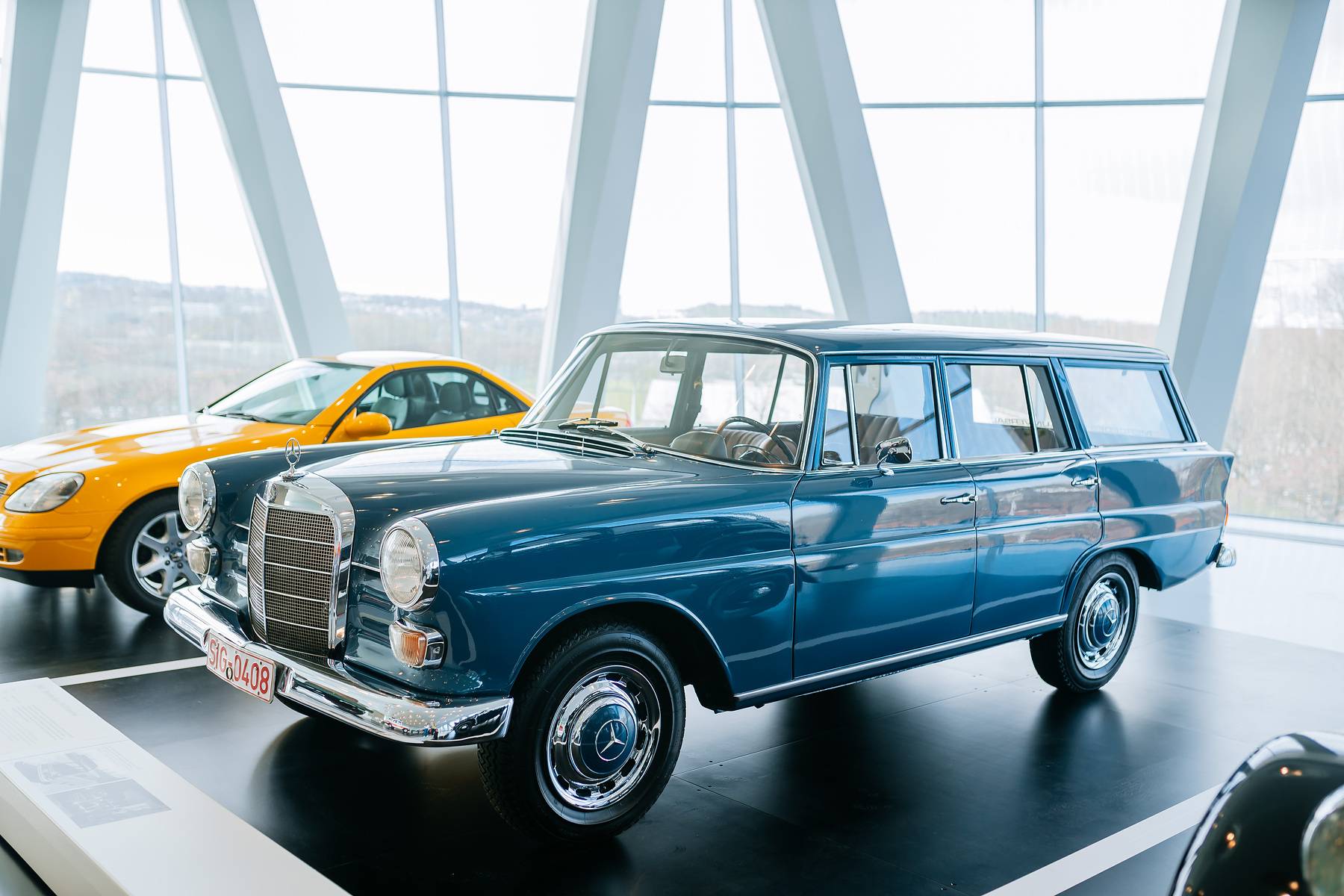
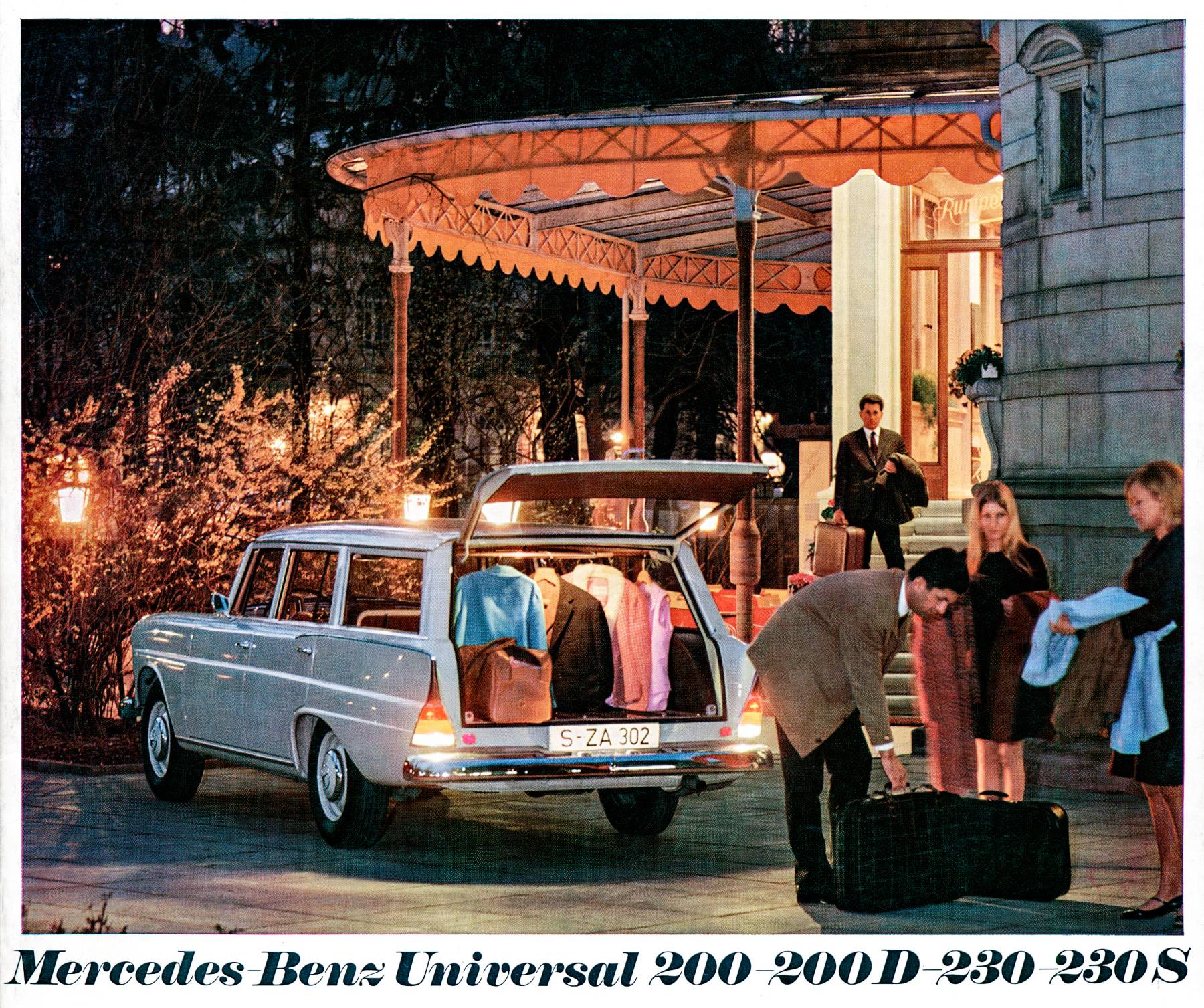
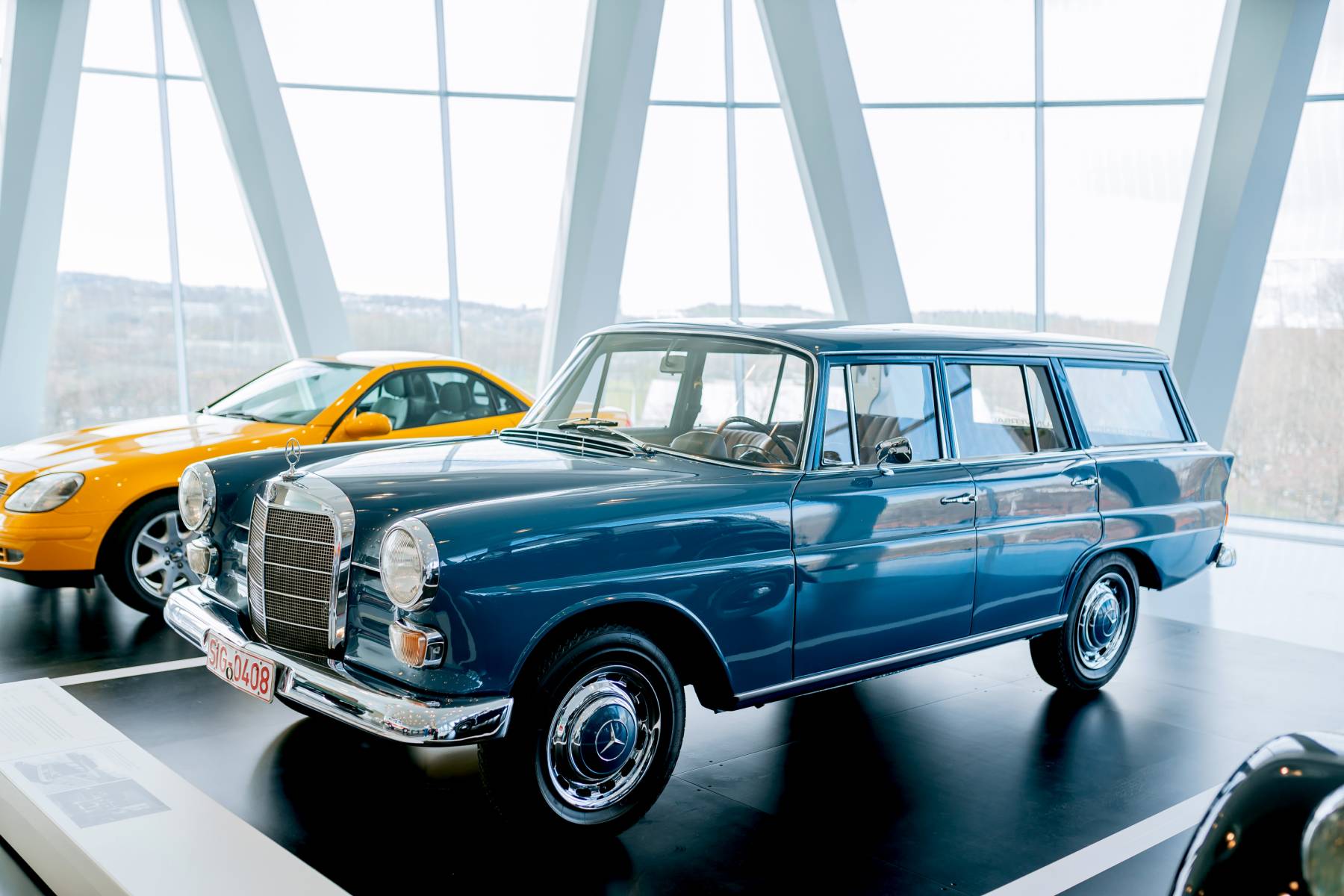
Mercedes-Benz added the 230 S “Universal” estate to its range in 1966. It was based on the W 111 upper-segment saloon and offered a large load area for both leisure and commercial use, making it a forerunner of the T-Modell estates that arrived with the 123 series in 1977.
The company did not build the car itself. Bodywork specialist IMA in Liège, Belgium, constructed the Universal on Mercedes-Benz chassis, with sales handled through the manufacturer’s own network. The 230 S version ran until 1968, while larger numbers were built on the four-cylinder “fintail” W 110 saloons, offered as the 200 D, 200 and 230. One visible technical difference: the IMA estates ran 15-inch wheels against the saloons’ 13-inch items, which raised ground clearance.
Two AMG V12s lead the 2001 Frankfurt line-up
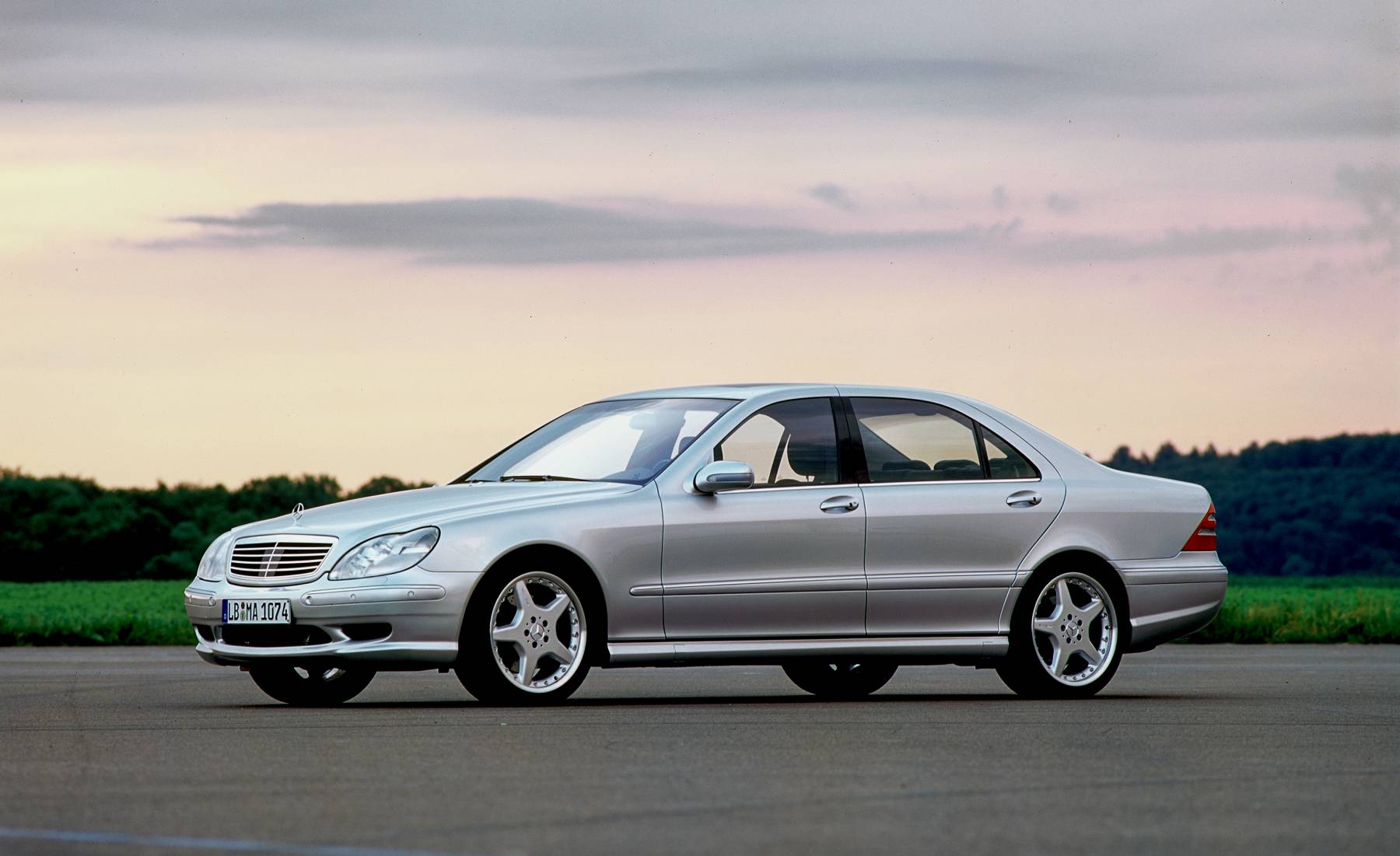
At the Frankfurt motor show from 11 to 23 September 2001, held while Mercedes marked the Mercedes name’s centenary under the slogan “The Story of Passion”, the headline cars were the S 63 AMG long-wheelbase (V 220) and the CL 63 AMG (C 215). Both used the M 137 V12 enlarged by AMG to 6.3 litres, producing 326 kW (444 hp). They topped the S-Class and CL-Class ranges until the S 65 long and CL 65 arrived in 2002 with a 6.0-litre turbocharged V12 rated at 450 kW (612 hp).
The same show brought a new entry-level G-Class, the G 270 CDI of the 463 series, with a 2.7-litre five-cylinder common-rail diesel making 115 kW (156 hp) and, according to the company, more torque than the earlier G 290 D and G 300 Turbodiesel. Alongside it came the Vaneo compact van (series 414), which borrowed the A-Class front-end layout, sandwich floor and axles, offered 550 kg (1,213 lb) of payload and was sold with Surf, Snow, Bike and Carry accessory packages.
A 3-litre six for the US market
Seventy-five years ago, at the Paris motor show held from 4 to 14 October 1951, Mercedes-Benz showed the 300 S as a Cabriolet A, roadster and coupé. Technically close to the 300 (W 186) limousine but given its own W 188 series number, it used the 3-litre M 188 straight-six with three Solex downdraught carburettors and a higher compression ratio than the 300, for 110 kW (150 hp). Top speed was over 175 km/h (109 mph), which put it among the fastest German cars of its day.
The 300 S became an important door-opener for the brand in the United States in the early 1950s — a role the 300 SL “Gullwing” (W 198) took over from 1954. The revised 300 Sc replaced it in 1955 as a coupé and in 1956 as a cabriolet and roadster.
From car bodies to light aircraft
On 15 December 1926, Hanns Klemm took over Daimler-Benz AG’s aircraft construction operation and founded Leichtflugzeugbau Klemm GmbH. Born in Stuttgart in 1885, he had run the aircraft design office and later body engineering at the Daimler-Motoren-Gesellschaft plant in Sindelfingen, and after the merger with Benz & Cie. headed the Mercedes-Benz design office there. Aircraft work at DMG went back to 1915.
Klemm’s name is tied to light aircraft: he initiated the Daimler L 15 in 1922, followed in 1924 by the L 20, which from 1925 used the air-cooled two-cylinder boxer F 7502 designed by Ferdinand Porsche. In August 1928 the 22-year-old Friedrich Freiherr von Koenig-Warthausen set off from Berlin-Tempelhof in an L 20 on a round-the-world flight, completing it on 22 November 1929. A reconstruction of his L 20 “Kamerad” is on display at the Mercedes-Benz Museum.
Rudolf Uhlenhaut at 120
Rudolf Uhlenhaut was born in London on 15 July 1906. He joined the Mercedes-Benz test department in 1931 after studying mechanical engineering, became technical head of the racing department in 1936, added passenger car testing in 1949 and eventually led passenger car development. He retired in 1972 and died in 1989. His name is attached to the 300 SLR “Uhlenhaut Coupé” (W 196 S), the most valuable car in the world.
What it means
Heritage communication is doing real work for Mercedes-Benz this year. The anniversary programme includes a “140 Years. 140 Places” tour in which three new S-Class saloons are travelling to 140 destinations across six continents; the company says it runs until October. Further material is available through the brand’s M@RS multimedia archive.
Source: media.mercedes-benz.com