
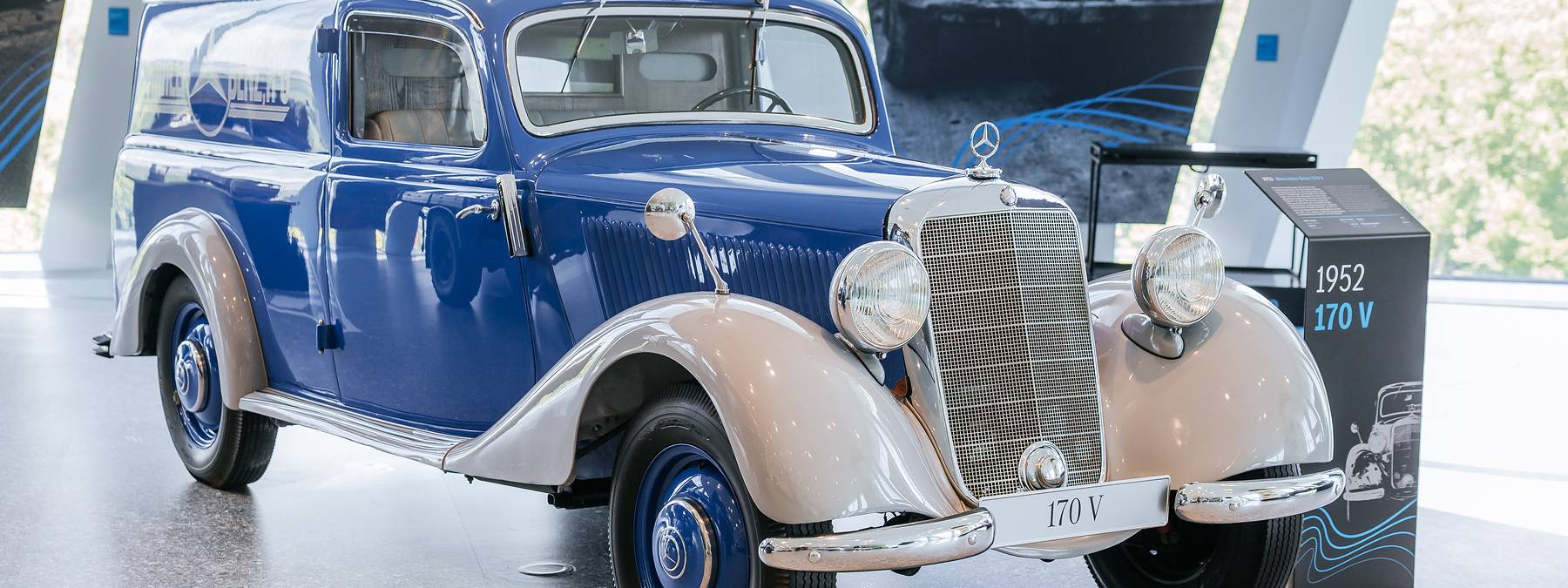
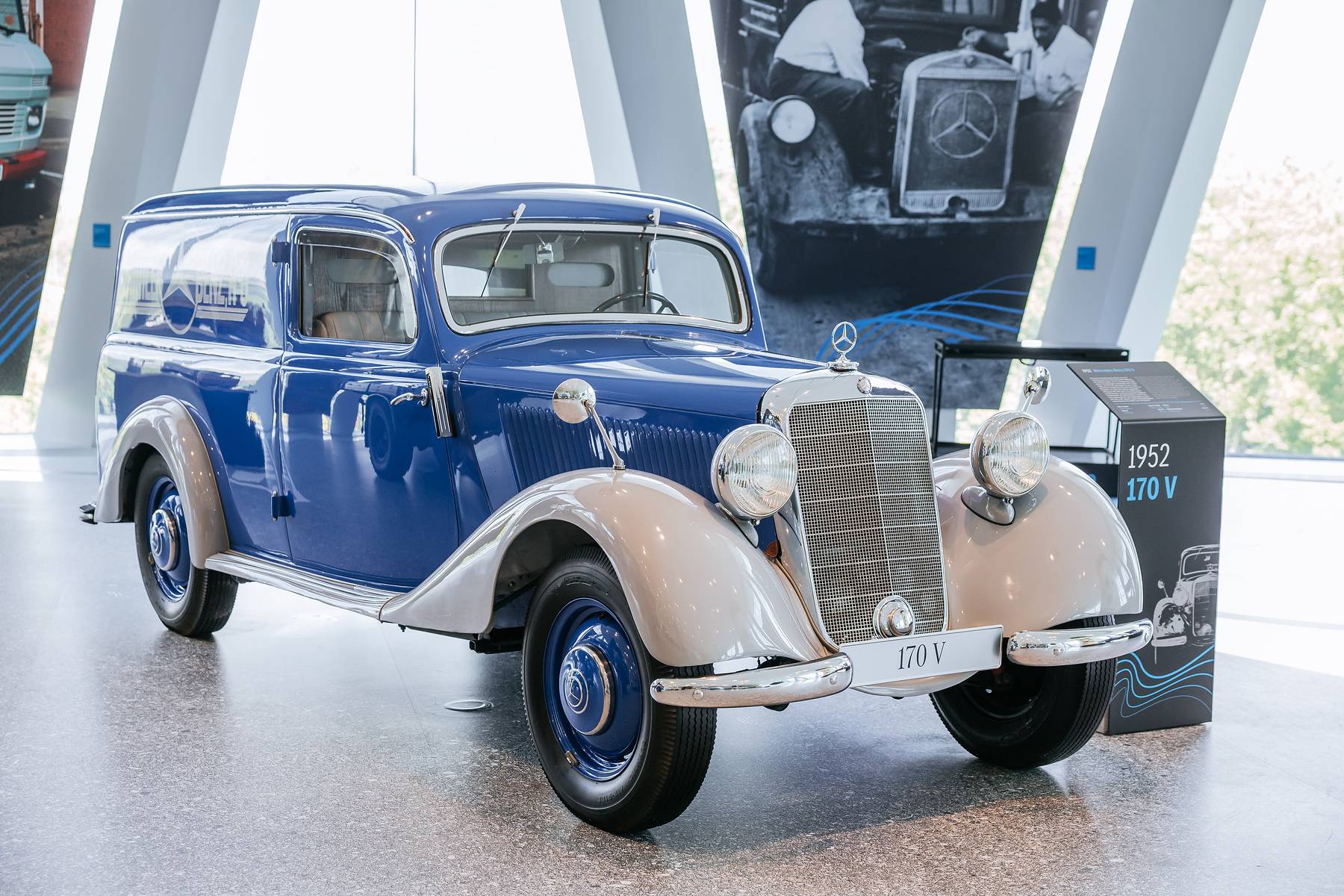
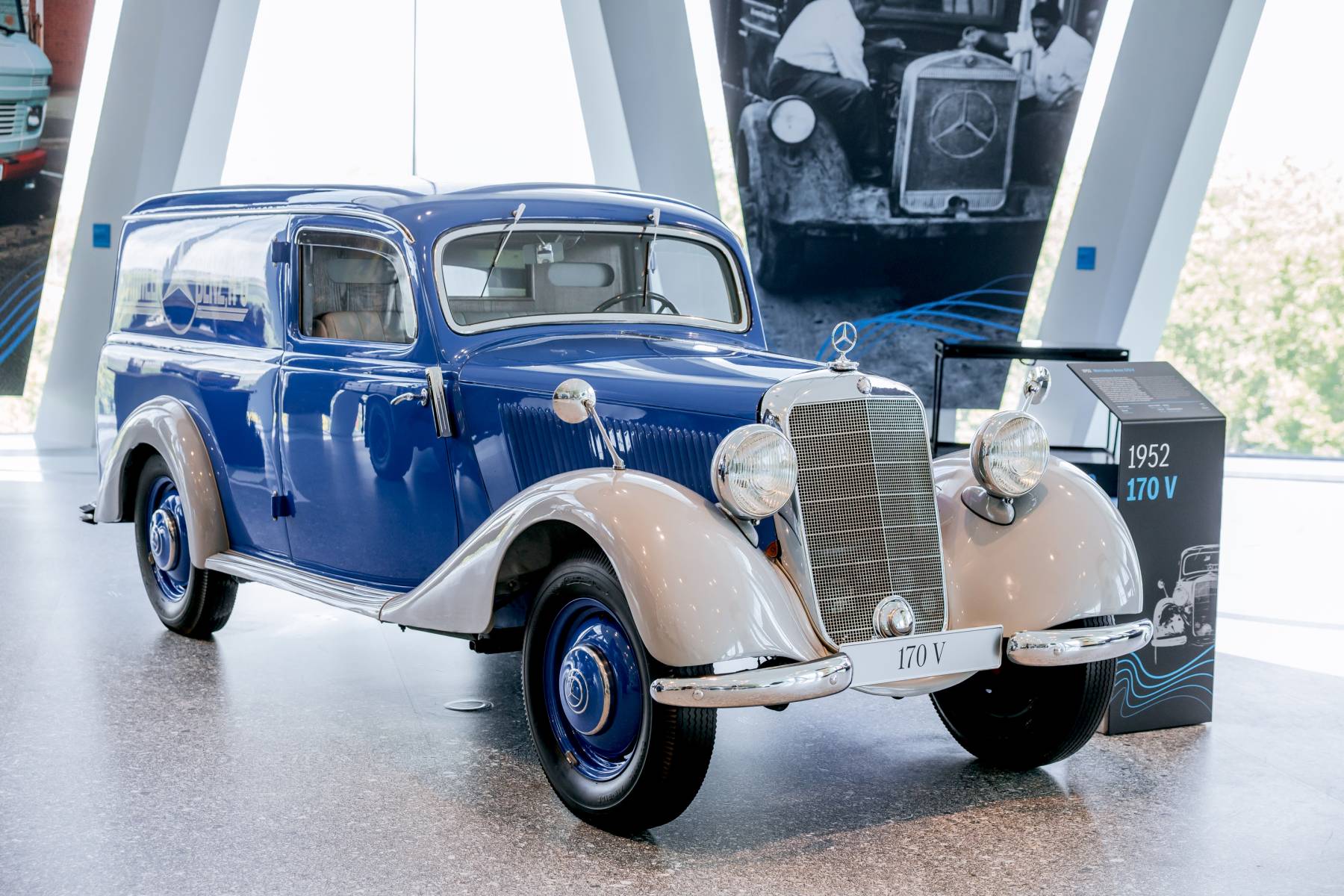
The Mercedes-Benz Museum has put a 1952 170 V panel van in its “Mercedes blue” service livery on display as part of the new special exhibition “130 Years of Commercial Vehicles”. The petrol-engined version of the Sindelfingen-bodied van was built just 35 times, against more than 500 of the diesel 170 D equivalent. It is one of seven exhibits tracing Mercedes-Benz vans and trucks back to 1896, and can be seen in Stuttgart until 4 April 2027.
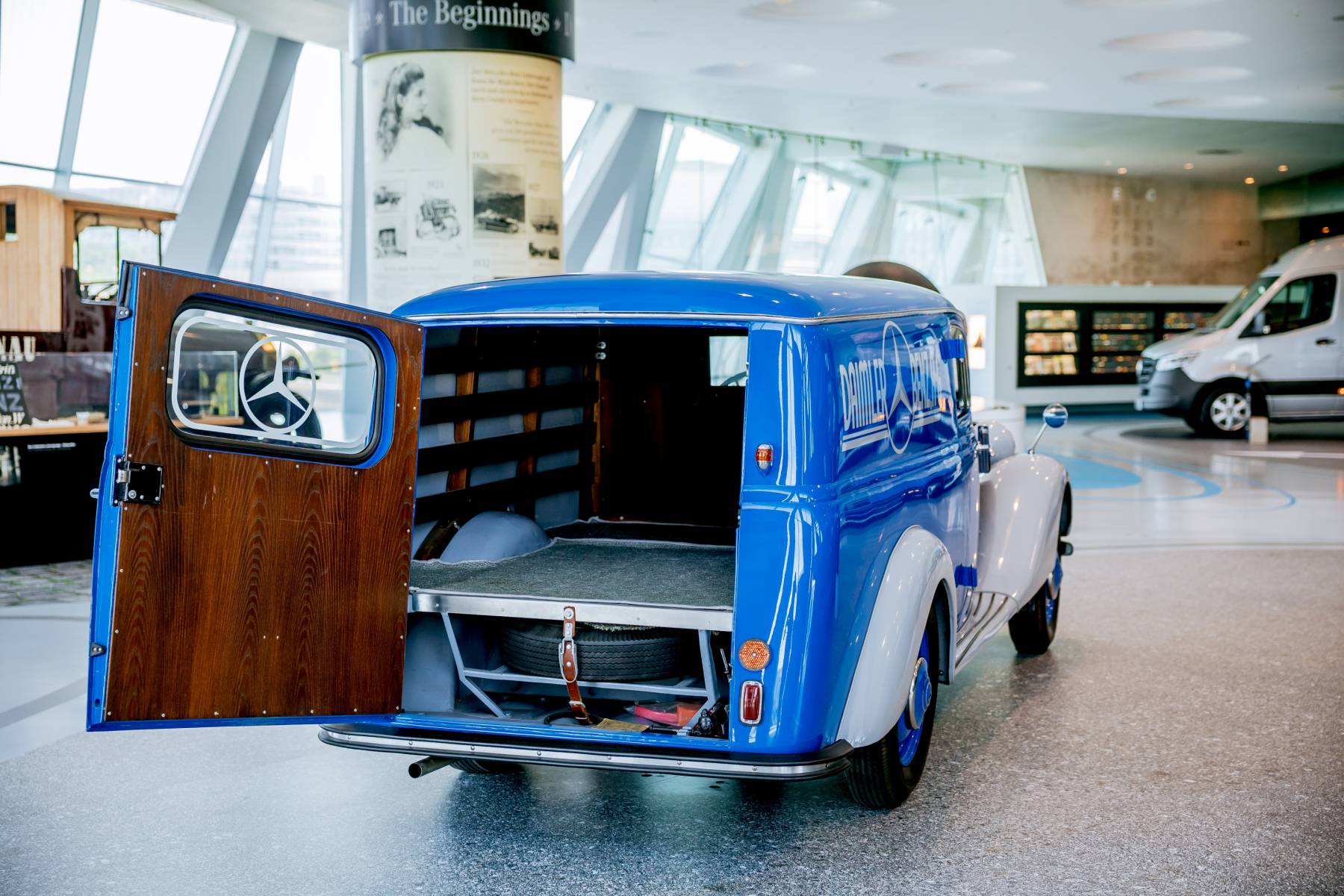
Mercedes-Benz has picked an unusually humble vehicle for the seventh instalment of the museum’s “Close-up” series: a 170 V panel van from 1952, built to carry a service mechanic, a full tool kit and a supply of spare parts.
Service came in blue
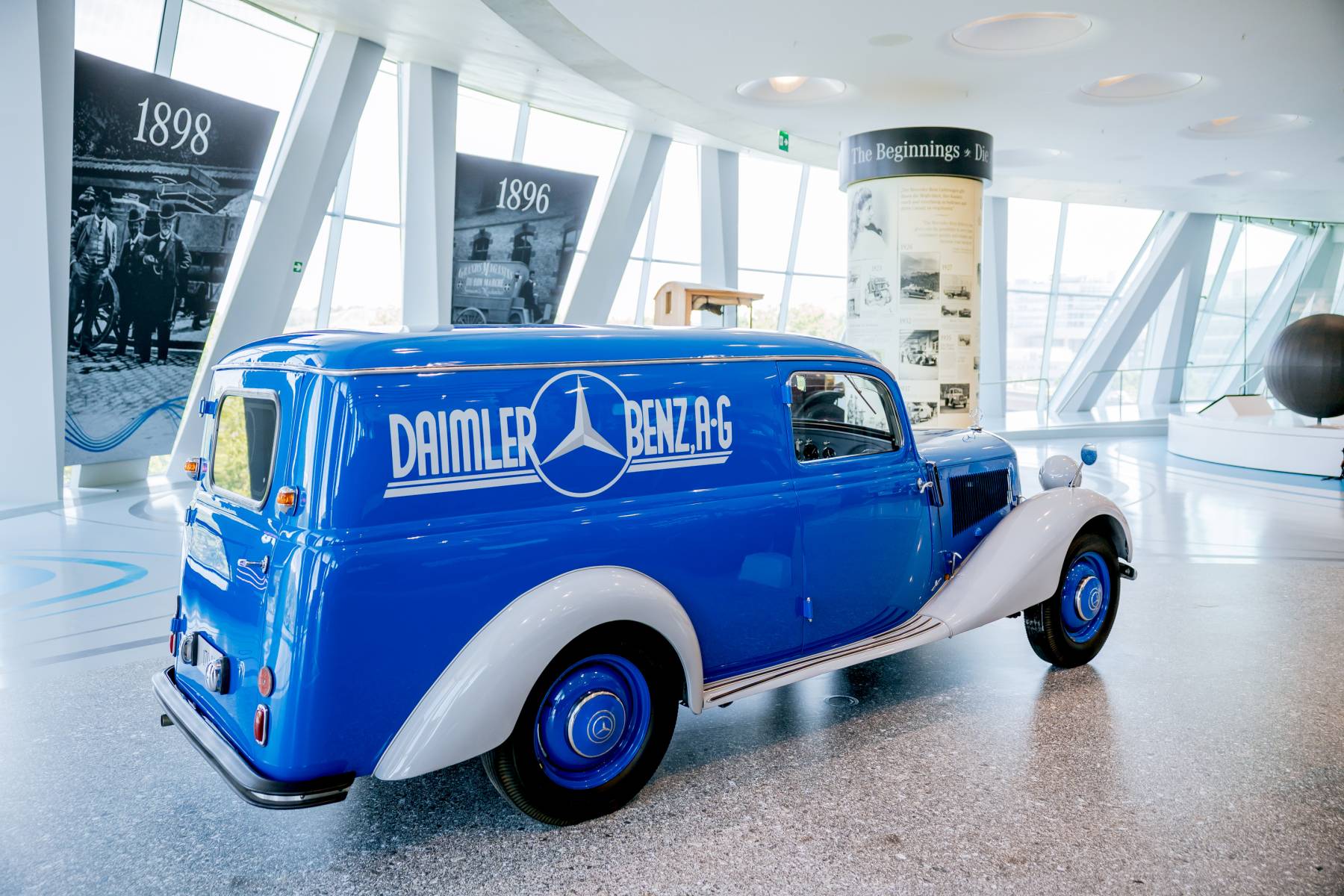
The paintwork is the first thing you notice. In the 1950s, “Mercedes blue” was the colour of the brand’s customer service fleet, so the shade alone told people what the van was there for. This particular example entered service in Switzerland from 1952. The same colour was later worn by one of the company’s best-known vehicles, the 1955 “Blue Wonder” high-speed race car transporter.
A Sindelfingen body over a wooden frame
Above the light grey front wing, ahead of the driver’s door, sits a silver plaque reading “Sindelfinger Karosserie. Daimler-Benz A.G.” with the three-pointed star at its centre — a reference to the factory’s tradition of coachbuilt bodies dating back to the 1930s.
Underneath the neatly shaped sheet metal is a visible wooden substructure. Inside the load bay, the wooden hoops are tied together by five slats on each side running forward to the cab bulkhead. The load floor is covered in carpet and lifts to reveal further storage space, which is also where the spare wheel lives. The box body is closed by a rear door hinged on the left.
Built for mechanics on the road
The cab was fitted out for people who spent their working day in it. Two mechanics sat on a bench trimmed in light grey artificial leather, with the transmission tunnel covered in the same material and tailored mats in a hard-wearing fabric around the pedals. The light grey dashboard carries a speedometer with odometer directly ahead of the driver, a combined fuel and oil pressure gauge to the left and a clock to the right, with control knobs in ivory-coloured plastic. Indicators are worked from the black horn ring: semaphore arms with a flashing function ahead of the doors at the front, conventional flashing lamps at the rear.
A petrol rarity next to a diesel workhorse
The 170 V (model series W 136) had been introduced in 1936, and it was the car Mercedes-Benz restarted series production with after the Second World War — flatbeds, panel vans and ambulances from May 1946, with saloons returning in 1947. The efficient 170 D joined the range in 1949 with a 1.7-litre OM 636 diesel producing 29 kW (40 hp), aimed squarely at tradespeople during West Germany’s economic recovery.
Both versions were built as Sindelfingen-bodied panel vans in 1952, but in very different numbers. The diesel ran to more than 500 units. The quicker petrol model, with 33 kW (45 hp) at 3,600 rpm and a top speed of 116 km/h (72 mph), was built just 35 times.
What else is in the exhibition
“130 Years of Commercial Vehicles” gathers seven exhibits from the history of Mercedes-Benz vans and trucks since 1896. The museum has also temporarily placed authentic reconstructions of the 1896 Daimler truck and the 1899 Benz Combinations-Lieferungswagen in its atrium. For customer service work in the 1950s, the company used several W 136 variants, including estate-bodied cars built by outside coachbuilders such as Lueg, some of them paired with a purpose-built trailer for a complete tool set.
Facts: Mercedes-Benz 170 V panel van (1952)
- Model series: W 136
- Body: Sindelfingen panel van, wooden substructure with steel panels
- Engine (170 V): petrol, 33 kW (45 hp) at 3,600 rpm
- Top speed: 116 km/h (72 mph)
- Production, petrol panel van 1952: 35 units
- Production, 170 D diesel panel van 1952: more than 500 units
- Diesel alternative: 1.7-litre OM 636, 29 kW (40 hp)
The special exhibition runs until 4 April 2027. The Mercedes-Benz Museum is open Tuesday to Sunday from 9am to 6pm, with last admission at 5pm.
Source: media.mercedes-benz.com